TROYA
Mirador Interpretativo Laguna Troya
Año: 2026
Tamaño : 6,8m x 6,9m x 5,8m | 38 m2
Tools: Rhino, Grasshopper, Karamba
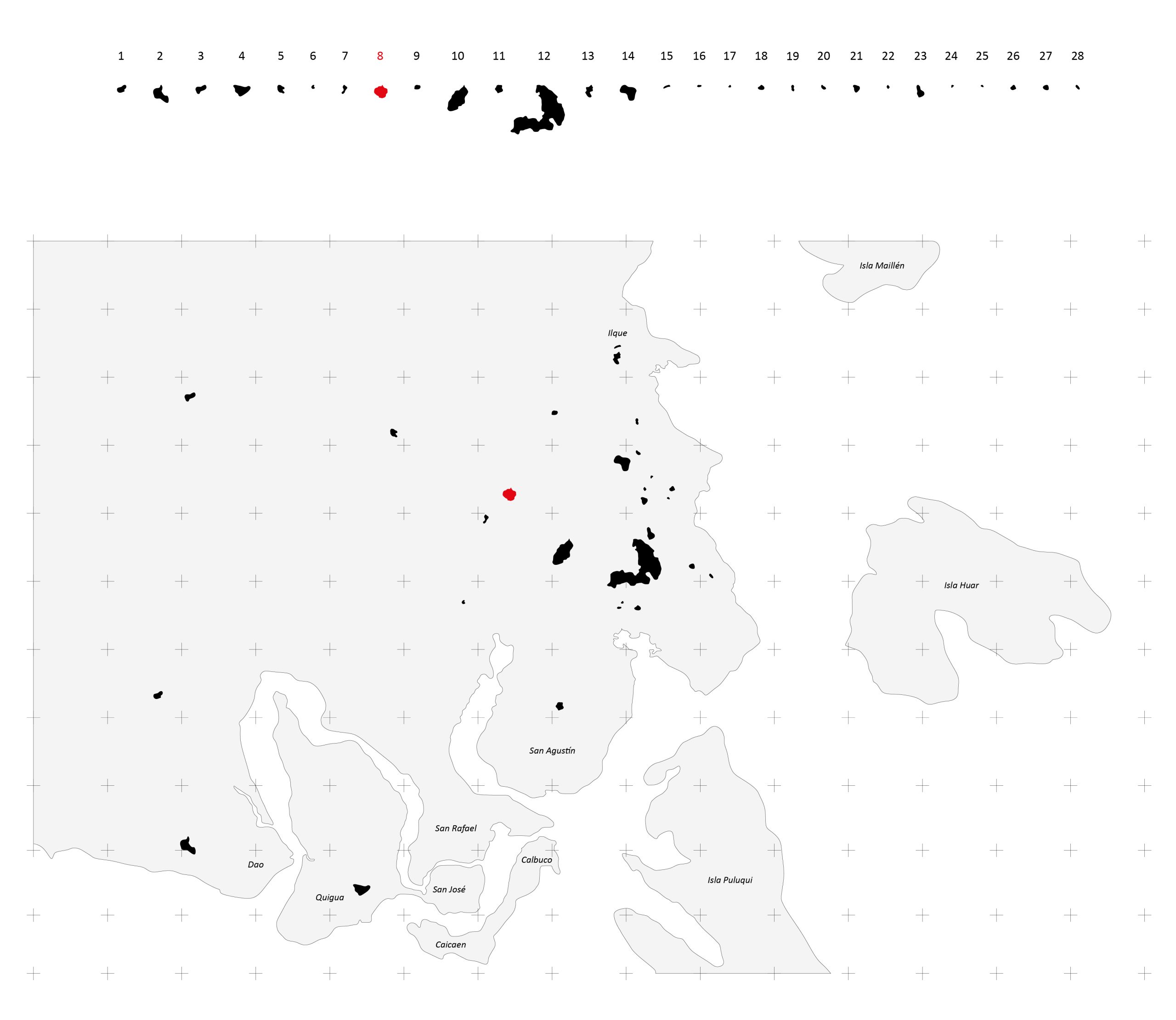
Locación: Laguna Troya, Putenío, Calbuco, Chile
Financiamiento: Creación Artística Fondart 2025
Equipo: Francisco Calvo – Katherine Cáceres – Juan Luis Marín
Ilustradora Científica: Sol Pacheco
Equipo Construcción: Pamela Villamar – Rosina Viotto Bergmann – Juan Peña – Florencia Verdugo Silva – Camila Vera Llanos – Mauricio Santana Münzenmayer – Bernardo Marín
Colaborador: Concón Maderas Impregnadas
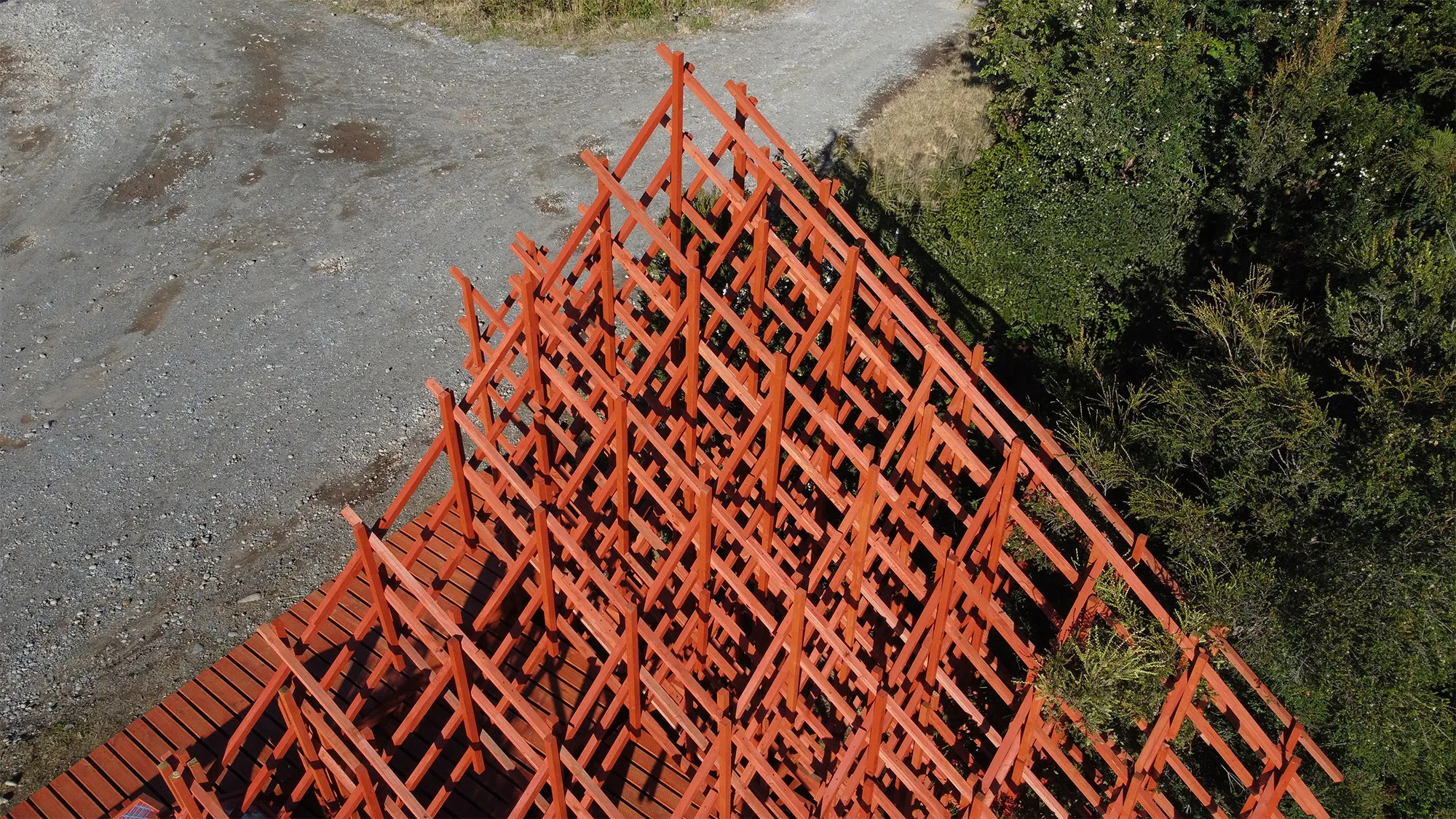
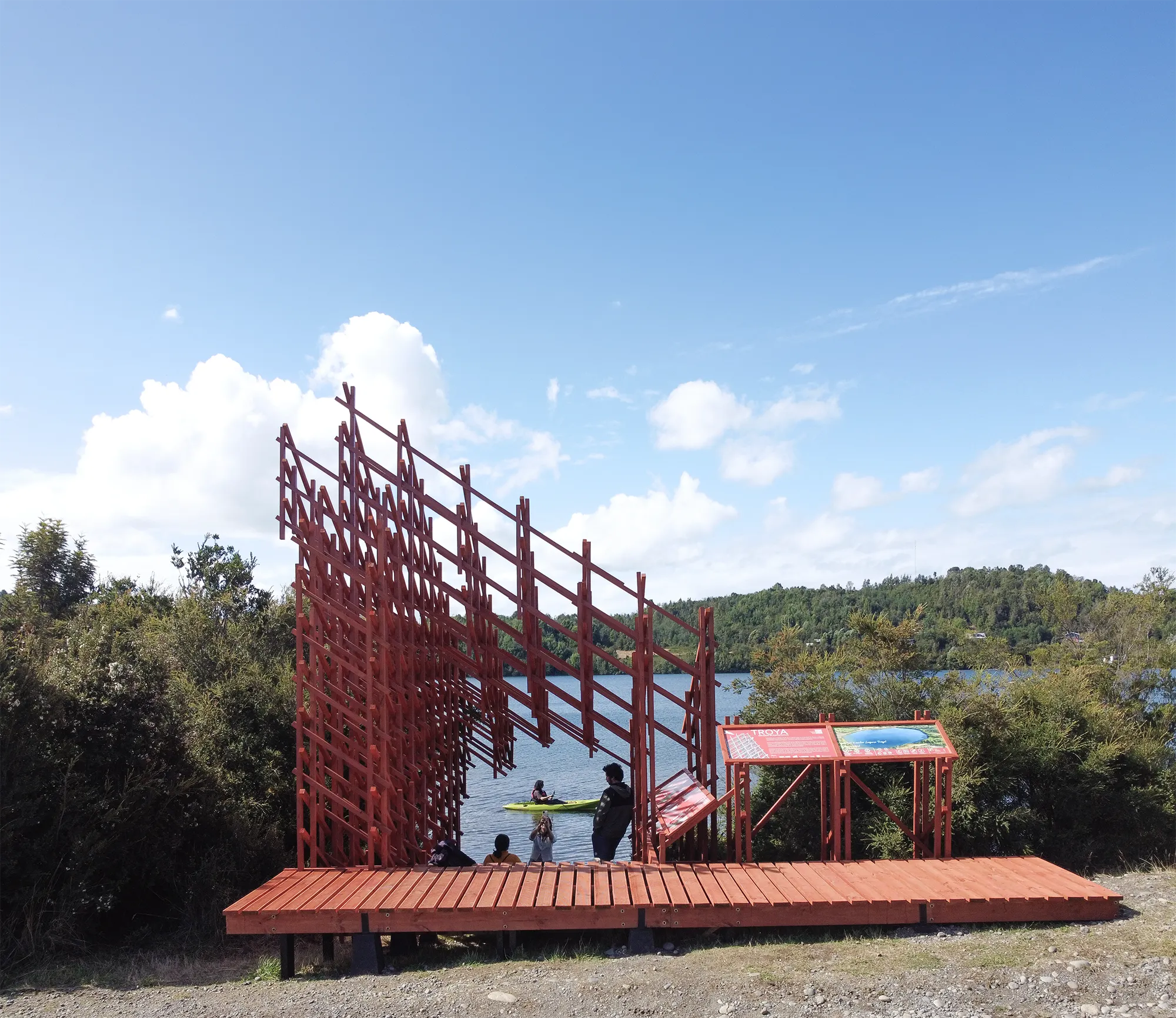
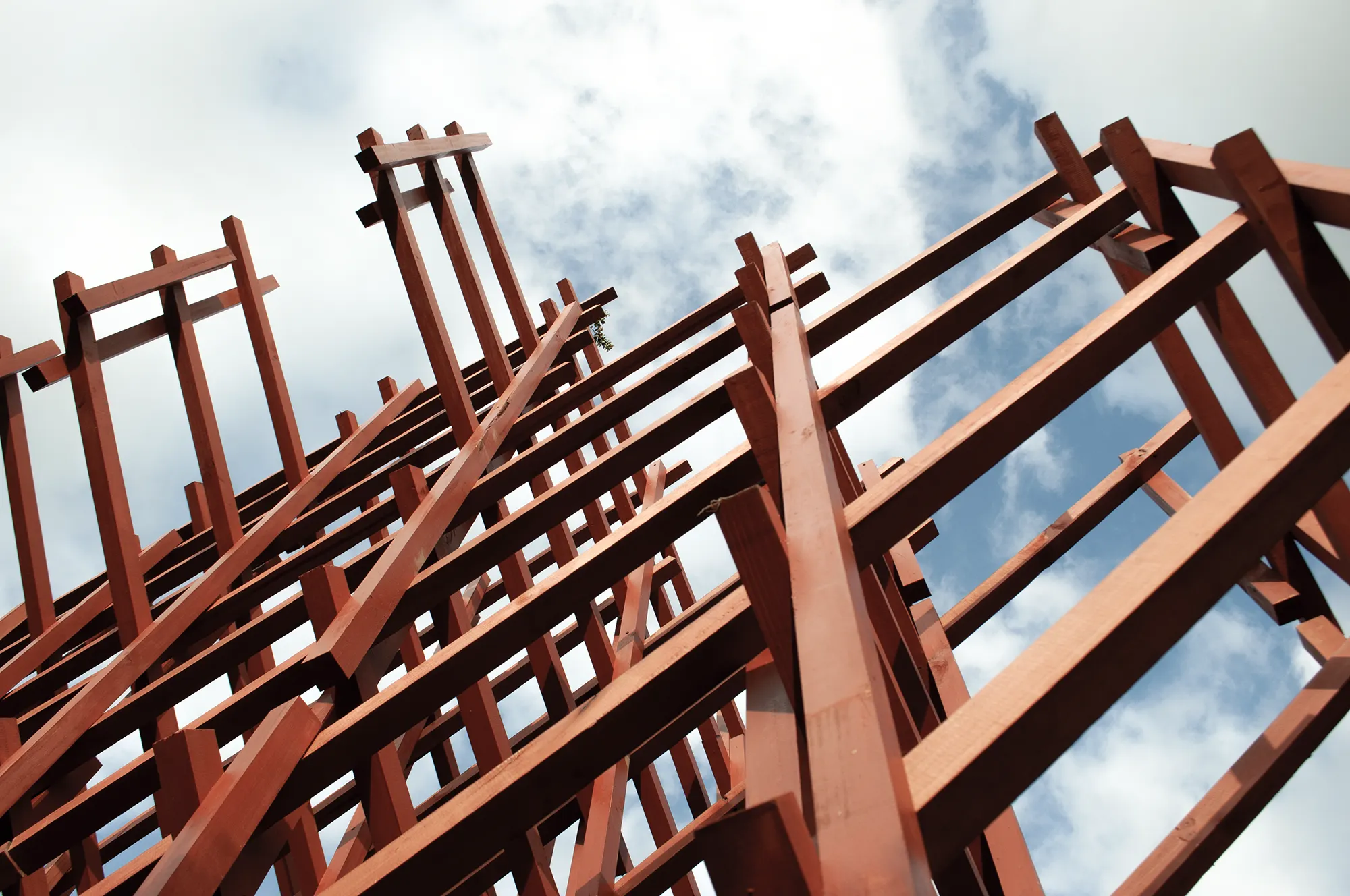
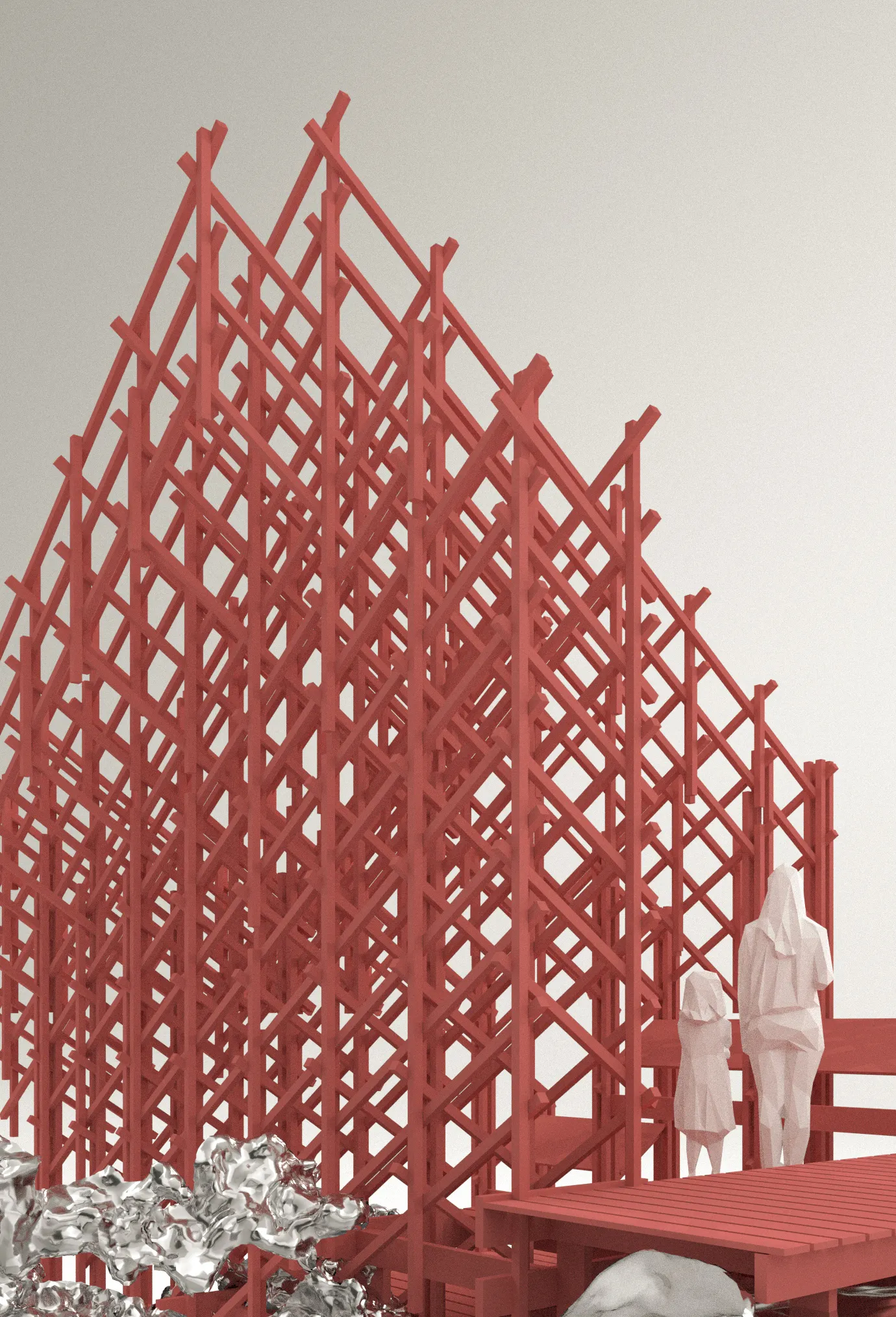
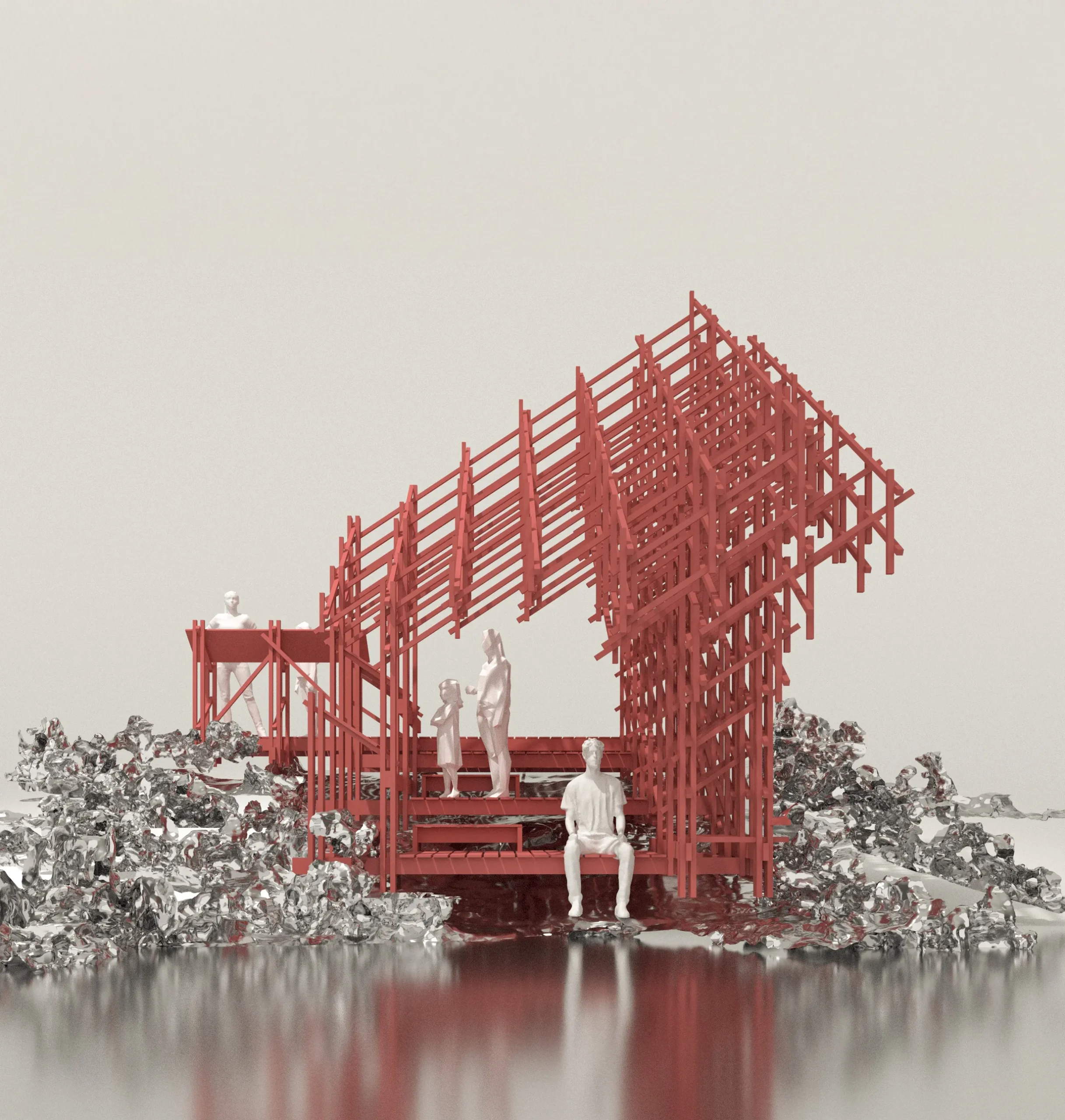
El Mirador Interpretativo Laguna Troya se desarrolla a partir de un sistema arquitectónico basado en la agregación de elementos discretos de madera de pequeña dimensión.
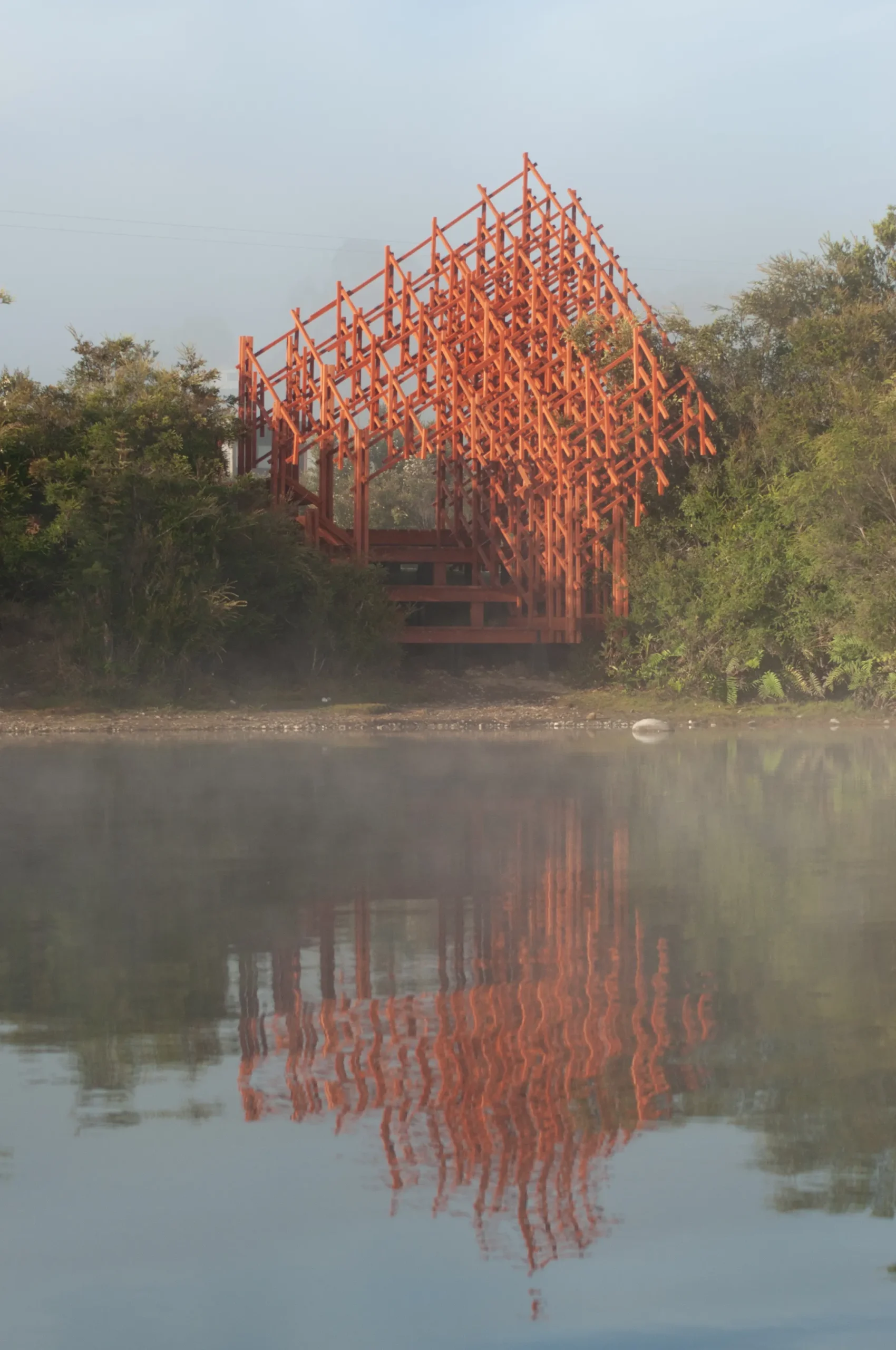
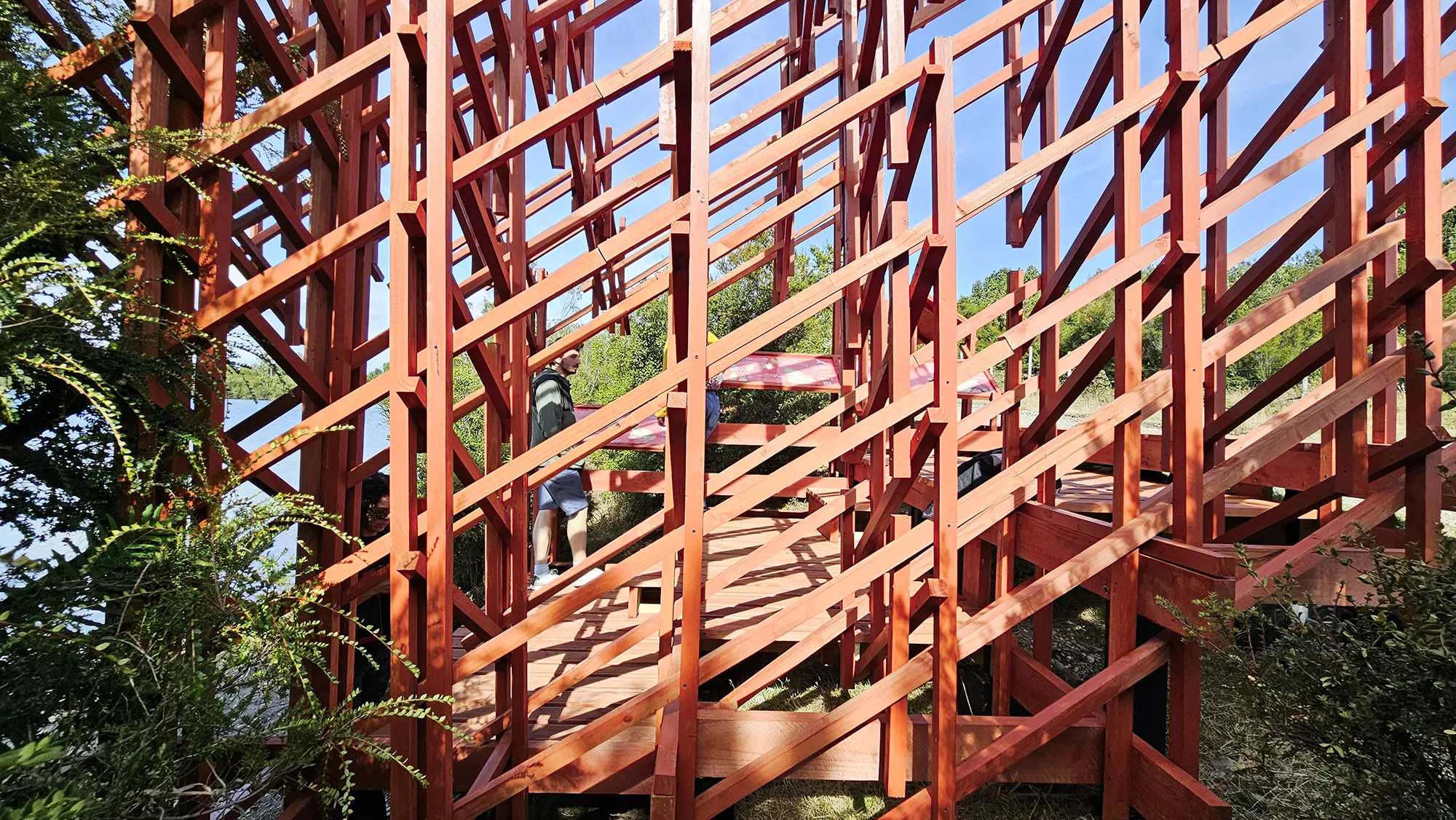
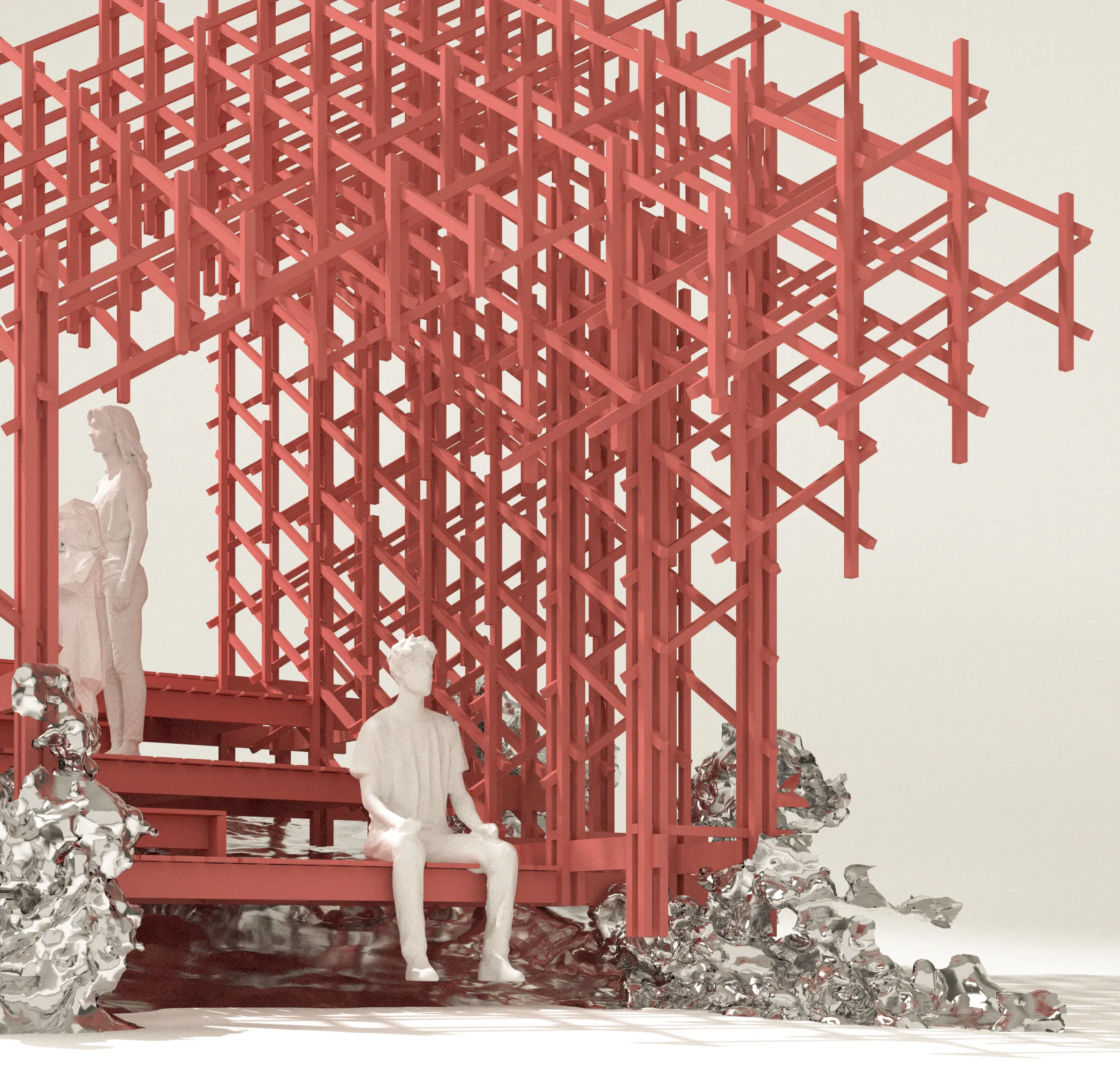
La estructura se configura mediante una lógica estereométrica que permite controlar densidad, rigidez y permeabilidad a través de la repetición y variación de sus componentes, evitando el uso de piezas de gran escala. Este sistema permite ajustar localmente el comportamiento estructural y espacial, generando un campo continuo que opera simultáneamente como soporte y filtro.
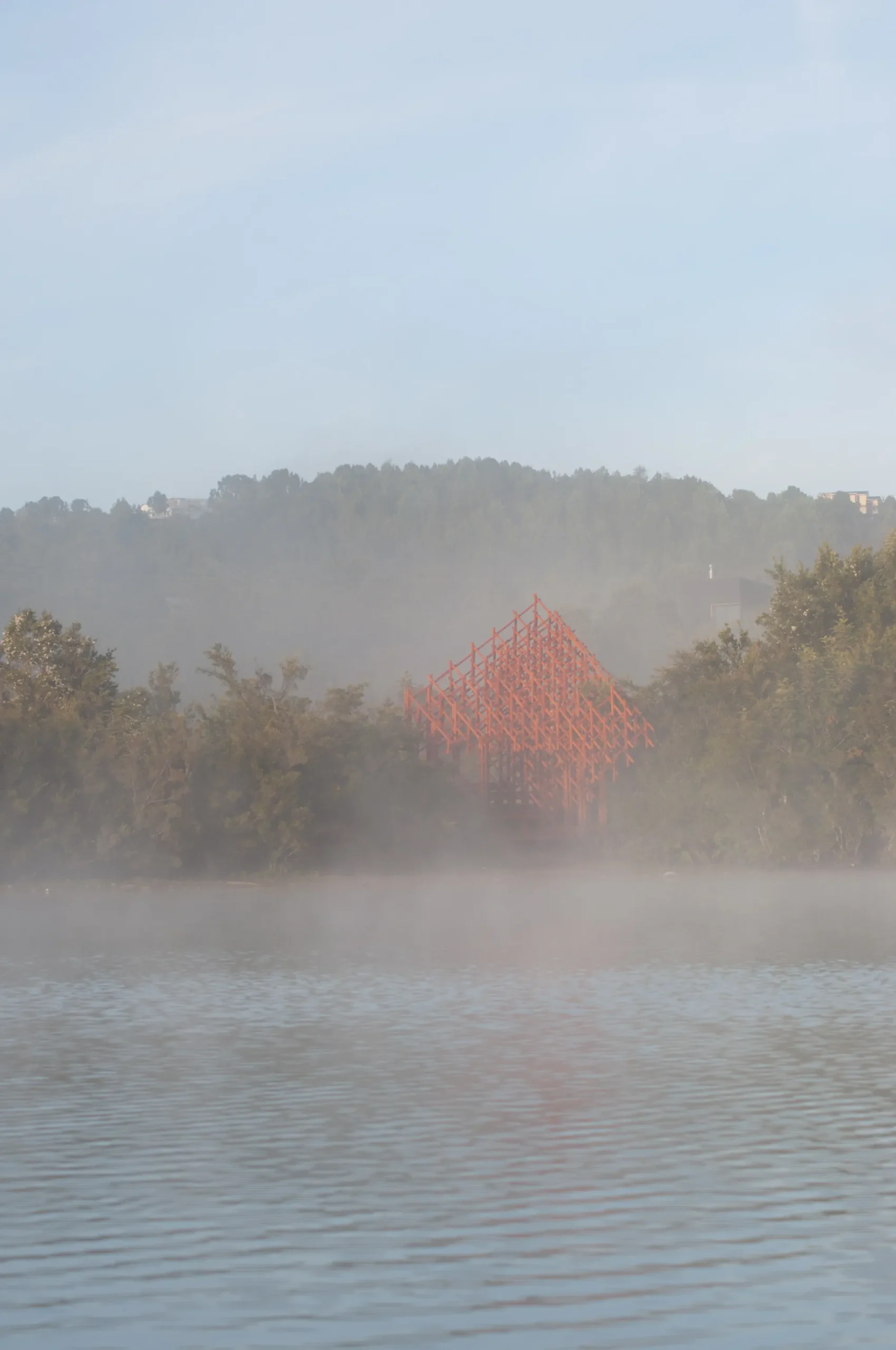
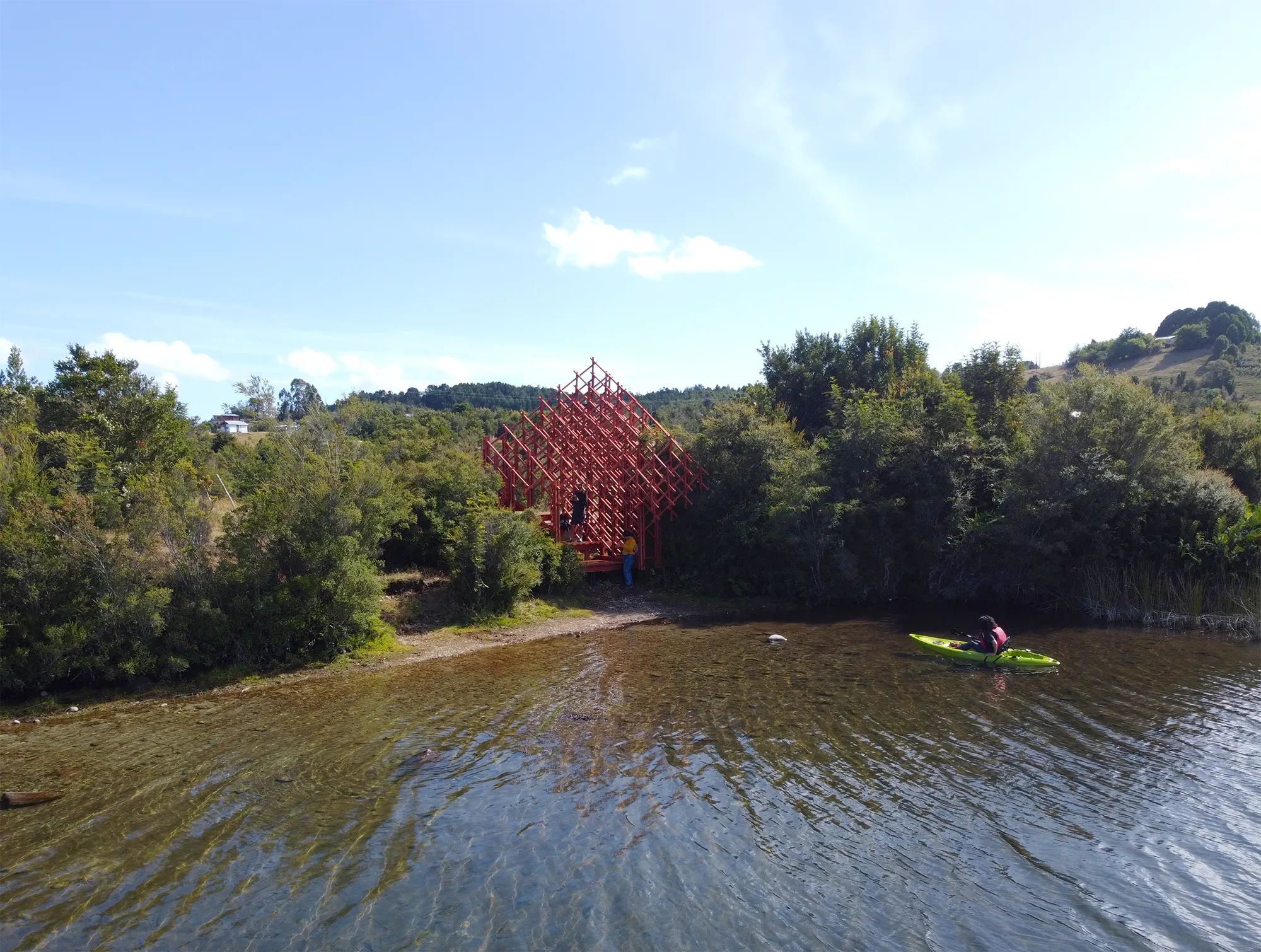
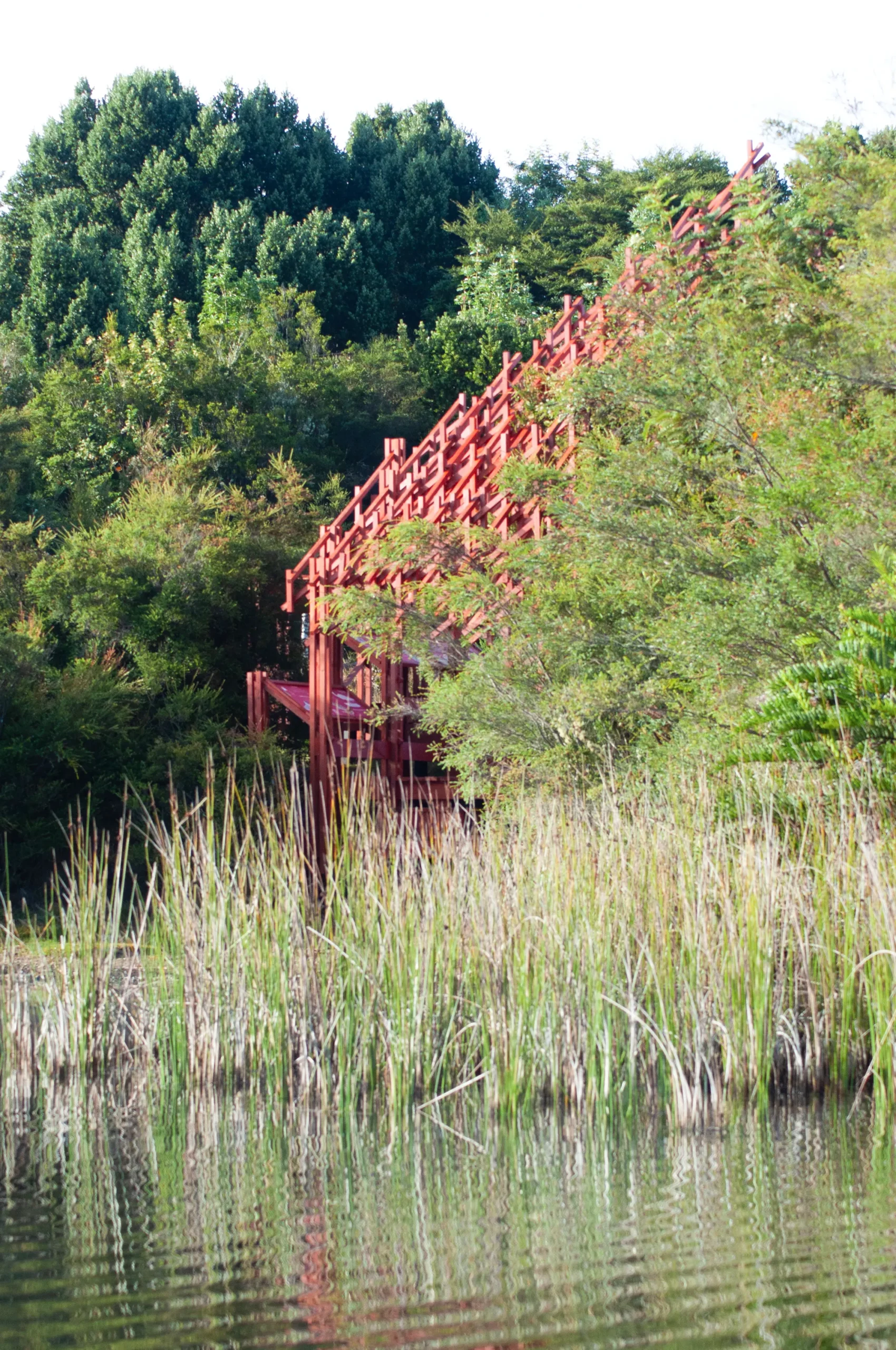
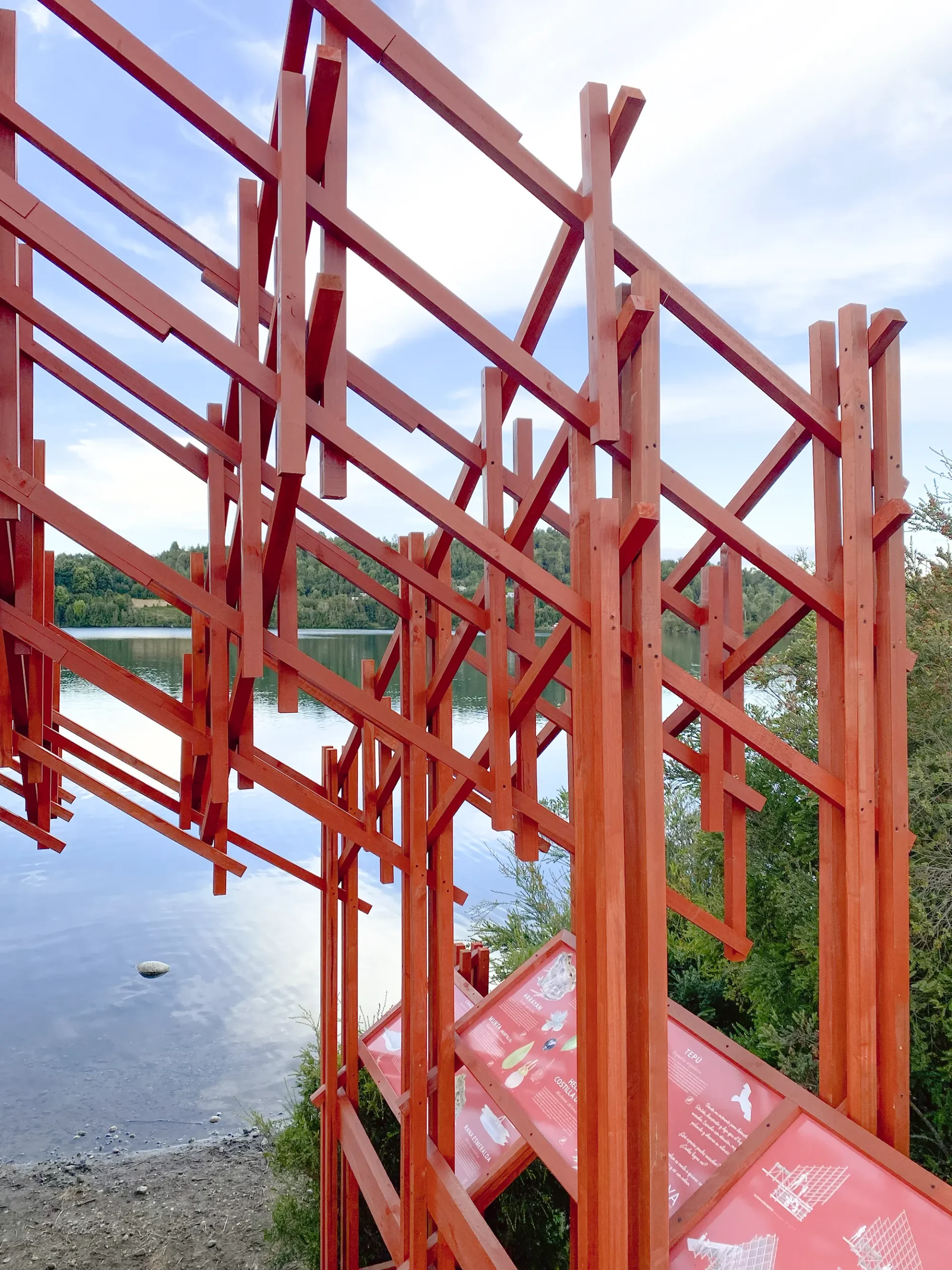
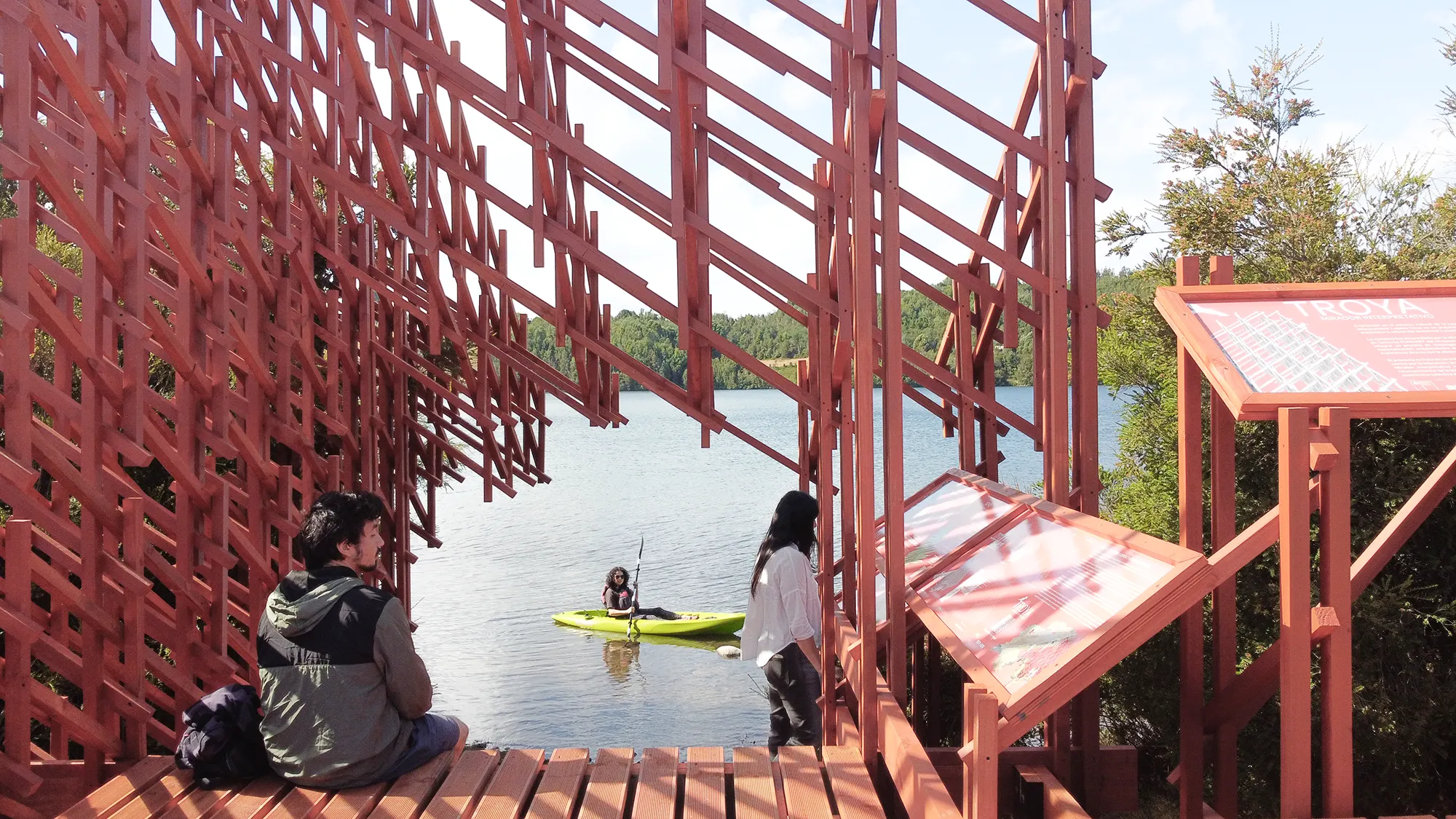
La condición abierta del sistema permite la integración progresiva de la vegetación, estableciendo una relación no binaria entre estructura y entorno. La separación entre elementos genera un volumen poroso que facilita tanto el crecimiento de especies vegetales como el tránsito y posado de aves, incorporando dinámicas del ecosistema dentro del propio sistema arquitectónico. Esta misma condición introduce una distancia variable entre observador y entorno, evitando una relación directa de ocupación y promoviendo una observación mediada.
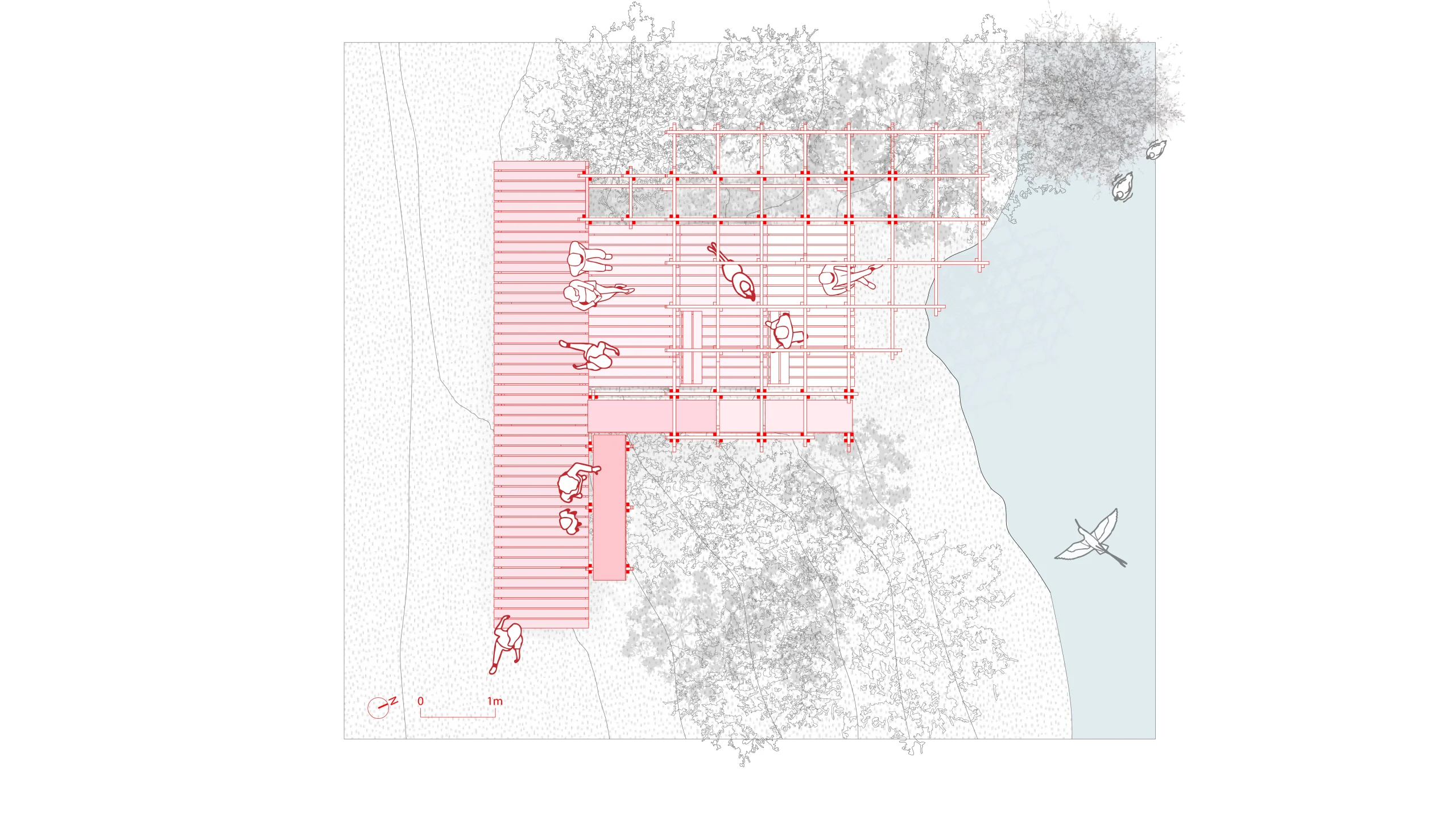
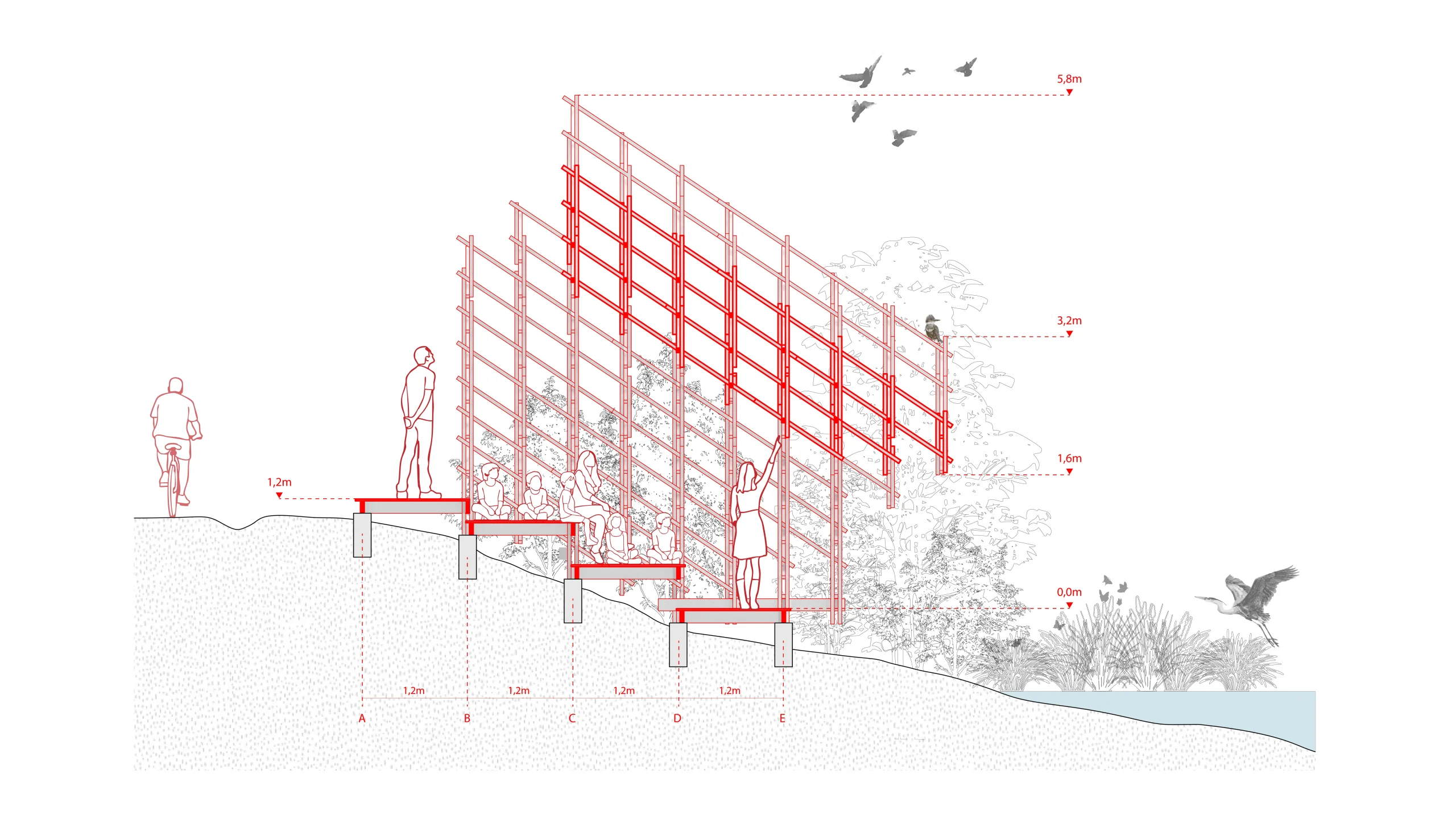
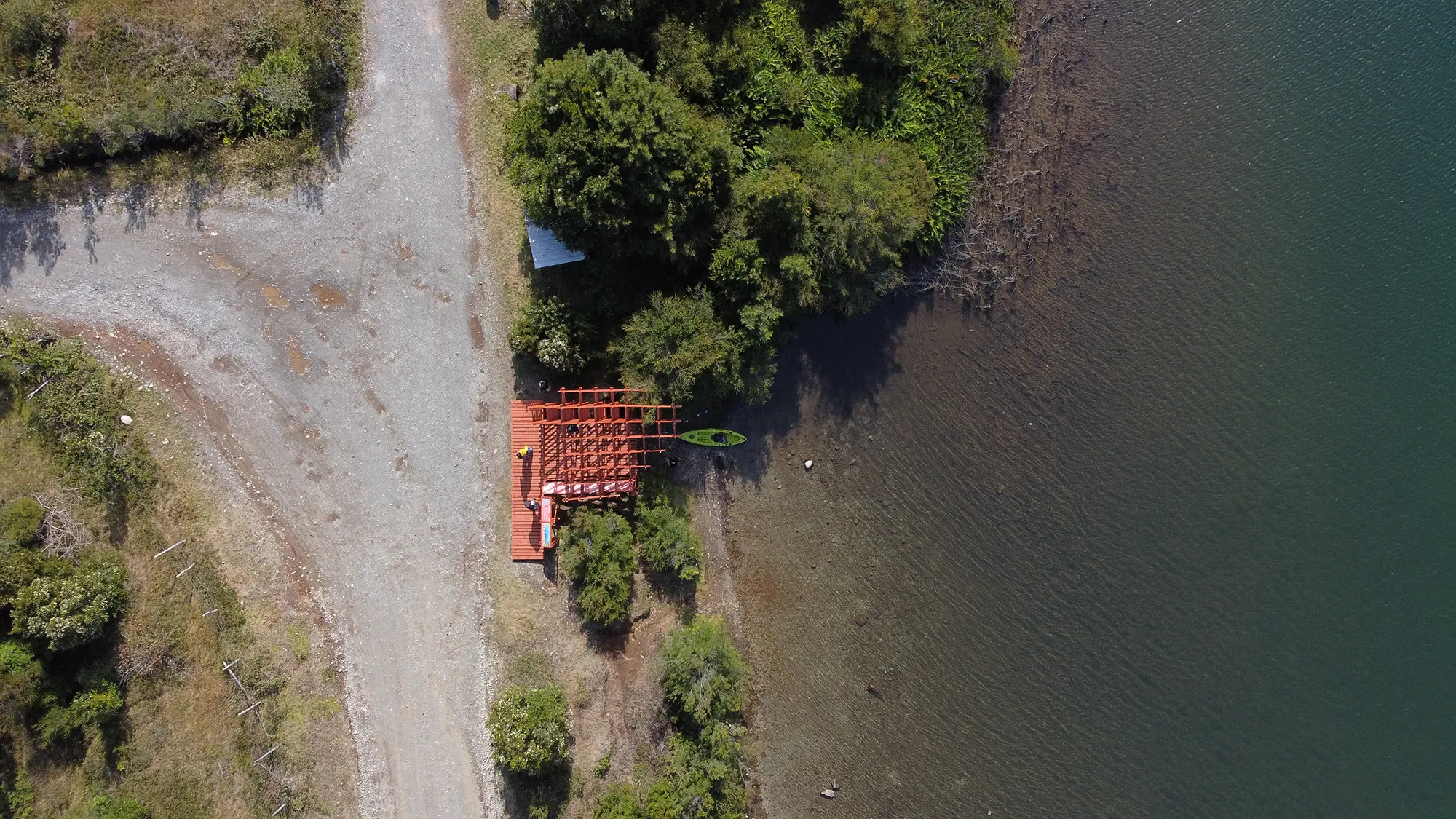
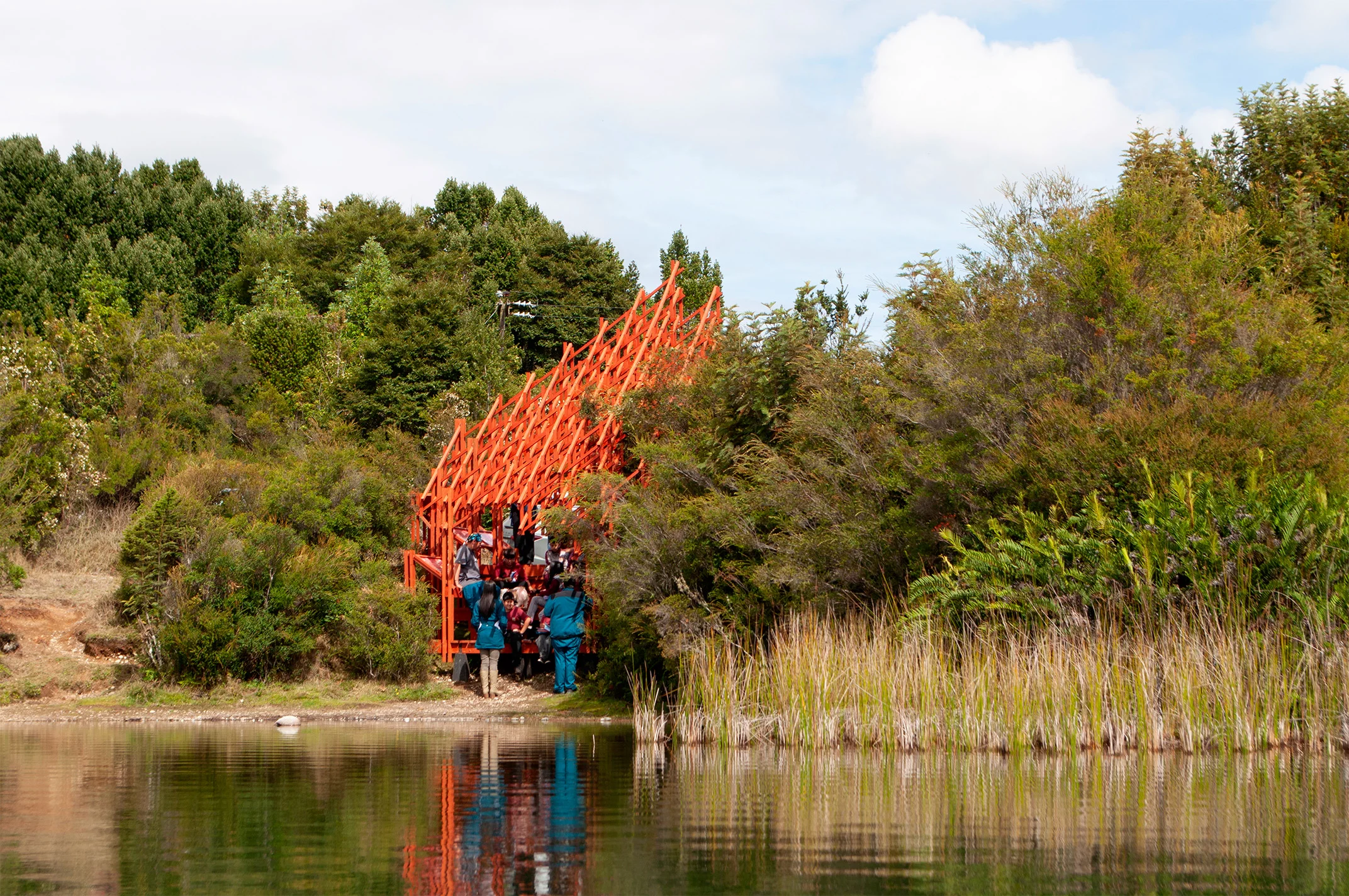
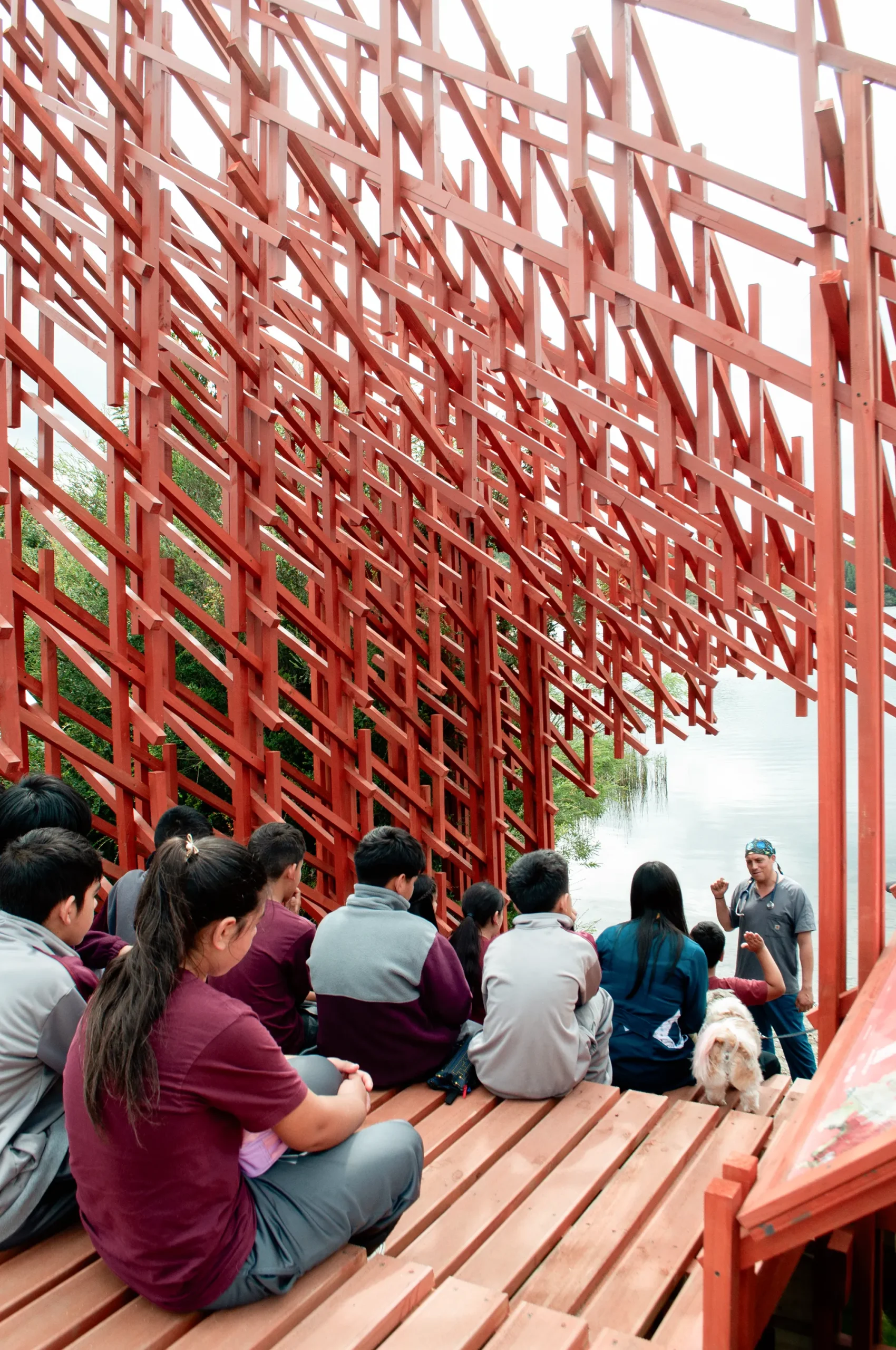
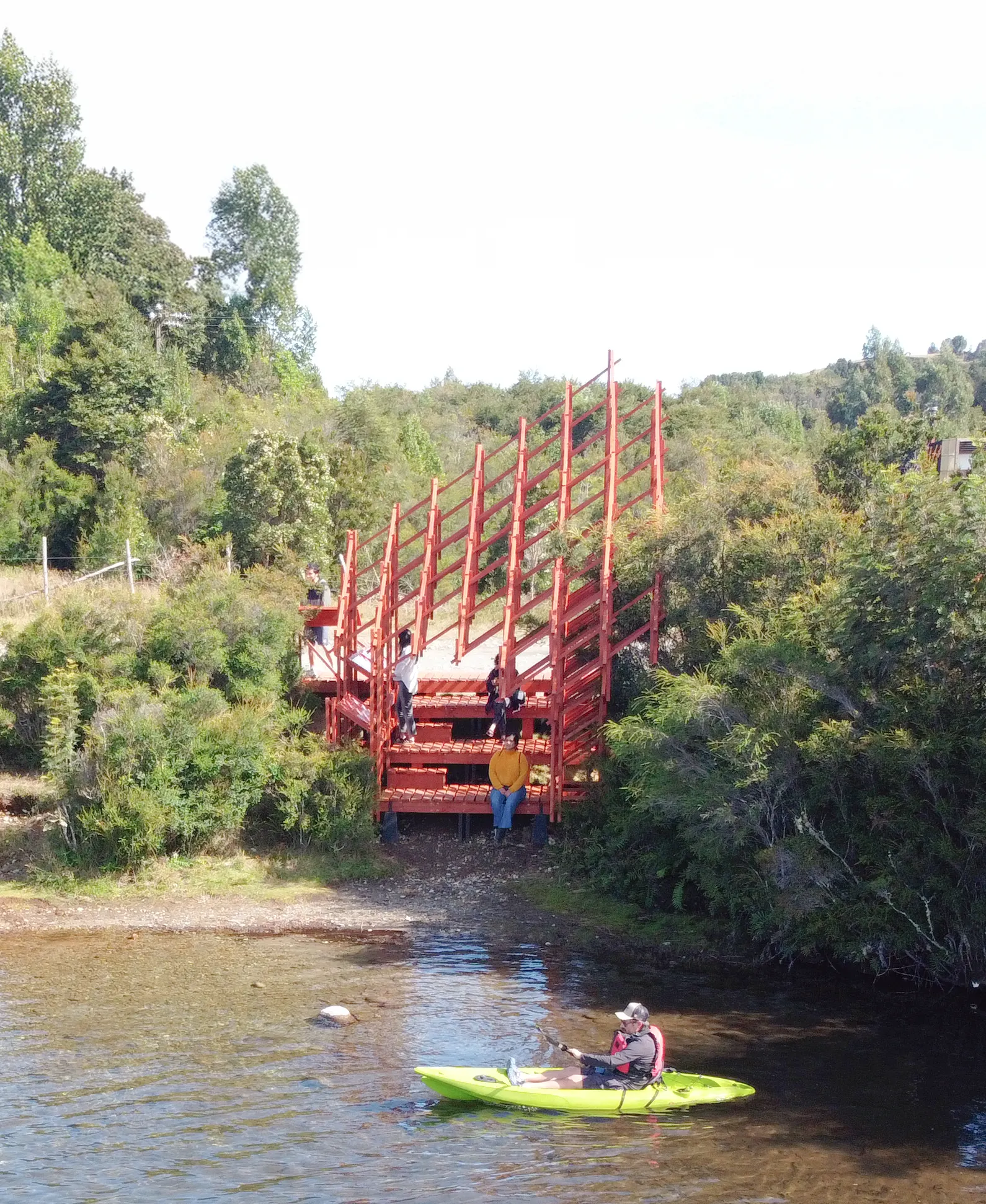
El suelo se resuelve como una serie de plataformas escalonadas que configuran un sistema de observación colectiva orientado hacia la laguna. Esta disposición opera como un aula abierta, donde la organización espacial no define un recinto cerrado, sino una condición de uso que permite actividades pedagógicas en relación directa con el entorno. La operación introduce una segunda capa de organización, donde topografía y estructura trabajan de manera complementaria.
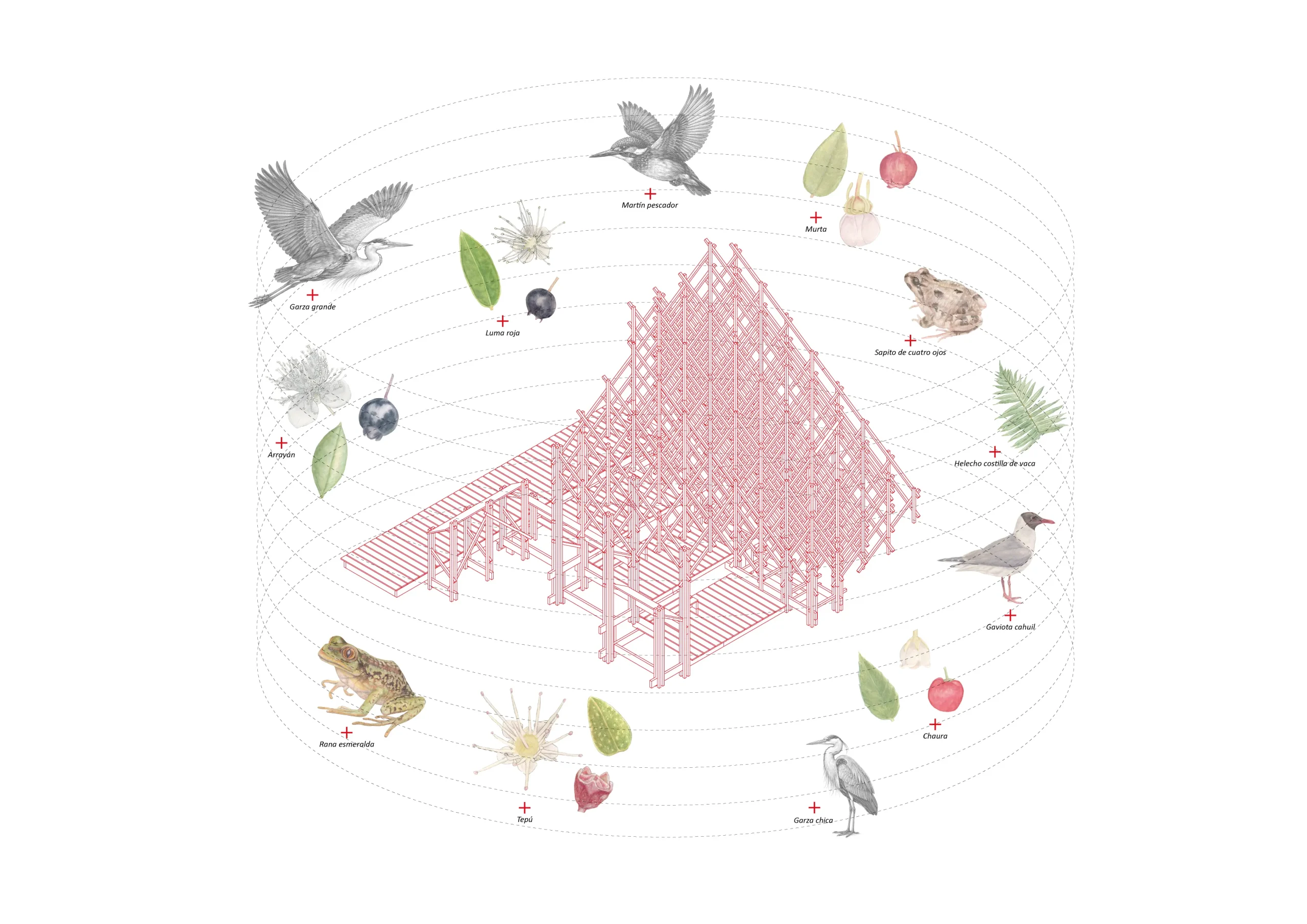
El proyecto incorpora información mediante ilustraciones científicas de flora y fauna local, desarrolladas por la bióloga marina Sol Pacheco Ortiz. Estas piezas operan como dispositivos de lectura que complementan la observación directa, integrándose al recorrido como parte del sistema espacial.
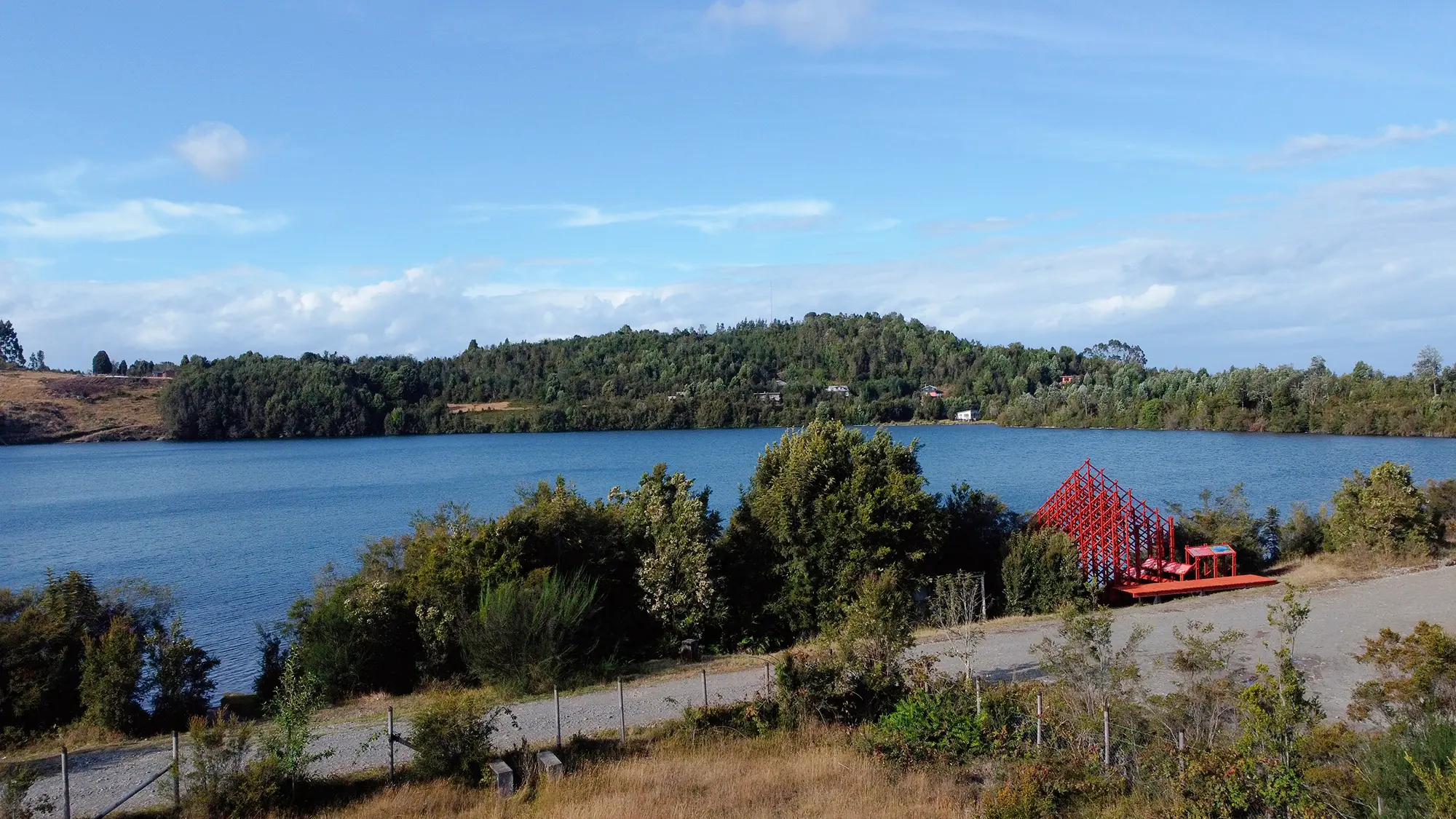
El mirador se emplaza en la localidad de Putenio, y forma parte de una iniciativa financiada por FONDART que articula investigación territorial, diseño y construcción. Su desarrollo considera la participación de la comunidad local, integrando prácticas de conocimiento situado en la definición y uso del espacio.
Más que un objeto, el proyecto se entiende como una infraestructura que vincula sistema constructivo, territorio y aprendizaje.
Laguna Troya Interpretive Viewpoint
Year: 2026
Size: 6.8m x 6.9m x 5.8m | 38 m²
Tools: Rhino, Grasshopper, Karamba
Location: Laguna Troya, Putenio, Calbuco, Chile
Funding: Fondart Artistic Creation 2025
Team: Francisco Calvo – Katherine Cáceres – Juan Luis Marín
Scientific Illustrator: Sol Pacheco
Construction Team: Pamela Villamar – Rosina Viotto Bergmann – Juan Peña – Florencia Verdugo Silva – Camila Vera Llanos – Mauricio Santana Münzenmayer – Bernardo Marín
Partner: Concón Maderas Impregnadas
The Laguna Troya Interpretive Viewpoint is developed through an architectural system based on the aggregation of small-scale discrete timber elements.
The structure is configured through a stereometric logic that enables the control of density, rigidity, and permeability through the repetition and variation of its components, avoiding the use of large-scale elements. This system allows for localized adjustments of both structural and spatial performance, generating a continuous field that operates simultaneously as support and filter.
The open condition of the system allows for the progressive integration of vegetation, establishing a non-binary relationship between structure and environment. The spacing between elements generates a porous volume that facilitates both plant growth and the movement and perching of birds, incorporating ecosystem dynamics within the architectural system itself. This same condition introduces a variable distance between observer and environment, avoiding direct occupation and enabling a mediated form of observation.
The ground is resolved as a series of stepped platforms that configure a collective observation system oriented toward the lagoon. This arrangement operates as an open classroom, where spatial organization does not define an enclosed space but rather a condition that enables pedagogical activities in direct relation to the environment. This operation introduces a second layer of organization, where topography and structure work in a complementary manner.
The project incorporates information through scientific illustrations of local flora and fauna developed by marine biologist and scientific illustrator Sol Pacheco Ortiz. These elements operate as reading devices that complement direct observation, integrating into the circulation as part of the spatial system.
The viewpoint is located in the locality of Putenio and is part of a FONDART-funded initiative that articulates territorial research, design, and construction. Its development involves the participation of the local community, integrating situated knowledge practices into the definition and use of the space.
Rather than an isolated object, the project is understood as an infrastructure that links construction system, territory, and learning.